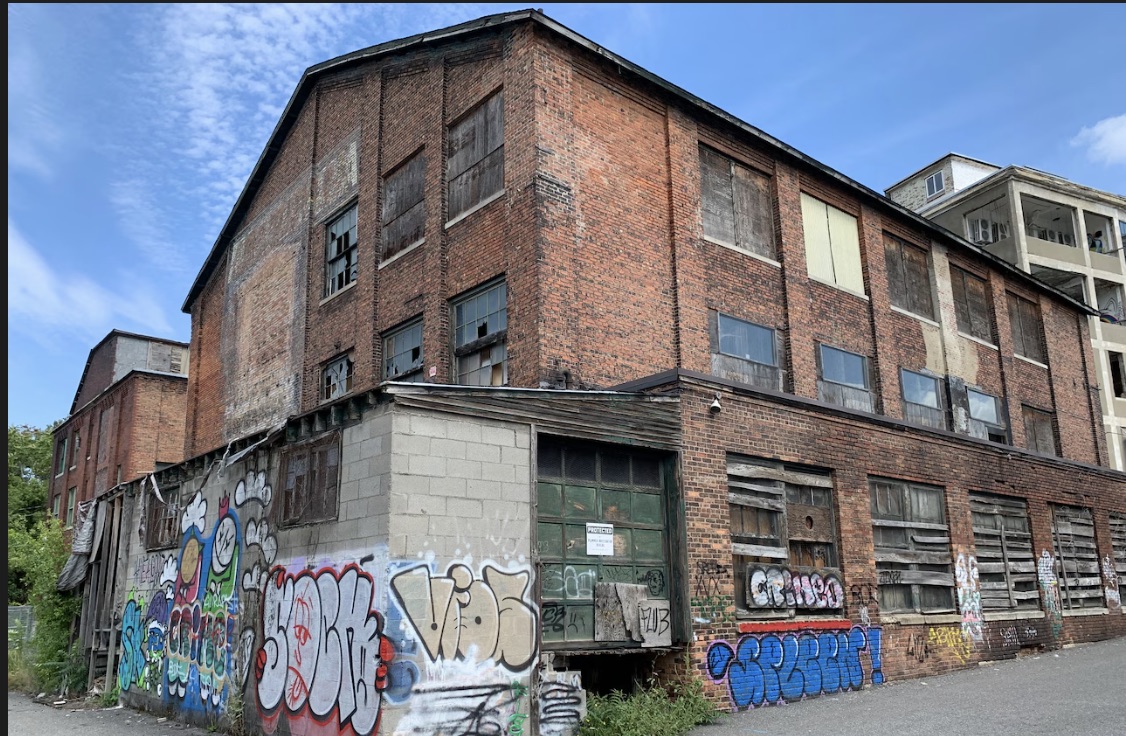
The brick walls are three feet thick in places. The loading docks are rusted shut. Graffiti covers the lower panels where industrial tenants once loaded freight cars bound for New York City. Across Onondaga County, buildings like this — relics of a manufacturing economy that left decades ago — sit alongside active warehouses, flex industrial parks, and newly leased distribution facilities. The question commercial property owners are asking in 2025 is a simple one: what is this market actually doing?
The answer is more complicated than either the optimists or the pessimists want to admit.
The Vacancy Number That Changes Everything
For most of 2023 and into early 2024, the Syracuse industrial market was operating near full capacity. Industrial vacancy in Onondaga County sat below 5% — a figure that, by commercial real estate standards, represents essentially no available space. Tenants were renewing. Asking rents were firm. Property owners had leverage they hadn’t seen in years.
Then a single event reset the market.
Rite Aid’s closure of its Onondaga County distribution center — one of the larger industrial occupancies in the region — pushed the countywide industrial vacancy rate from below 5% to 6.9% by the end of 2024. That single vacancy accounts for the majority of the movement. By mid-2025, warehouse and distribution vacancy had climbed nearly 50% compared to the same period the year prior.
The headline number obscures a critical detail. That vacancy is not evenly distributed.
The available space is heavily concentrated in large-bay product — facilities of 50,000 square feet or more. In the sub-20,000 square foot segment, which represents the majority of the industrial inventory by property count, vacancy remains minimal. Small and mid-size industrial tenants — contractors, light manufacturers, regional distributors, trades businesses — are still finding limited options in Central New York. The market for smaller industrial space is functionally tight. The market for large distribution facilities has a real vacancy problem.
Average industrial asking rents across the county sit at roughly $9 per square foot annually for Class B product, with Class A facilities and newer construction pushing higher. That figure has held relatively stable despite the vacancy increase, in part because the large-bay vacancy is concentrated in older, less functional buildings that were not commanding premium rents to begin with.
What the Office Market Is Actually Doing
The national office market story in 2024 is, by most metrics, a crisis. The national office vacancy rate closed the year at 18.9% — the highest it has been in decades, driven by remote work adoption that has not reversed itself at the pace that office landlords hoped it would.
Syracuse is not the national average.
Overall office vacancy in the Syracuse metropolitan area ended 2024 at 12.0% — more than six percentage points below the national figure. The average office asking rent across the market was $17.26 per square foot, with downtown Syracuse Class A space achieving $17.32 per square foot and premium properties reaching $26.50 per square foot.
The market, however, is bifurcating sharply. Eastside office submarkets showed vacancy of roughly 22%. Westside suburban submarkets were considerably higher. Downtown, by contrast, was performing. The pattern mirrors what national researchers have termed “flight to quality” — tenants who are renewing or relocating are choosing well-maintained, amenity-rich Class A space and giving up Class B square footage in the process. The net effect is a market where vacancy is climbing in older suburban office parks while downtown buildings with modern buildouts and walkable amenities maintain occupancy.
Office-to-residential conversions have accelerated in the downtown core, which is reducing the supply of obsolete office space and providing some stabilization for owners of properties that remain as office product.
The Inventory
The current commercial real estate market in Onondaga County encompasses approximately 16.87 million square feet available for lease across all property types. Industrial accounts for 2.47 million square feet across 70 active listings. Office accounts for 1.67 million square feet across 147 listings. Retail represents 1.11 million square feet across 79 listings. An additional 4.49 million square feet is available for sale rather than lease.
To put those figures in context: 2.47 million square feet of available industrial space sounds like a substantial number until you account for the fact that a meaningful portion of it is in a single large facility that closed when one company left. The denominator — the total industrial inventory — is large enough that the headline vacancy rate, while elevated from recent lows, does not represent a distressed market. It represents a market that absorbed a significant single-tenant departure and is in the process of recovering from it.
The Variable Nobody in 2019 Was Talking About
In October 2022, Micron Technology announced plans to build a semiconductor fabrication facility in Clay, New York — a town in northern Onondaga County, roughly 15 miles from downtown Syracuse. The project, which has since received $6.1 billion in federal CHIPS Act funding, represents one of the largest private investments in American manufacturing history. The full buildout carries a projected cost of $100 billion. The facility is expected to produce 9,000 direct on-site jobs and, by most economic projections, an additional 40,000 to 50,000 jobs across the regional economy over the life of the investment.
Baruch College’s Zicklin School of Business, in an independent economic analysis, projected that the Micron project could generate a $16.7 billion average annual increase in real economic output for the region — growth comparable in scale to what Central New York last experienced in the 1950s.
Construction at the Clay site is scheduled to begin in mid-2026. The first facility is expected to be operational by 2030.
The commercial real estate implications have already begun registering. Agricultural parcels near the Micron site that were trading at $3 million have been listed at $7 million or more since the announcement. Apartment rents across the metropolitan area are averaging $1,148 for a one-bedroom unit, with developers planning tens of thousands of new housing units to accommodate projected population growth. Industrial properties near major transportation corridors — particularly those positioned to serve construction supply chains and eventually semiconductor supply chain logistics — are being evaluated differently than they were three years ago.
None of this has fully materialized yet. The jobs have not arrived. The workers have not relocated. The supply chain has not been established. What has happened is that the expectation of all of it has already begun altering how investors, developers, and tenants are approaching the Central New York market.
How Commercial Properties in This Market Actually Get Managed
A 6.9% industrial vacancy rate and a bifurcated office market create a specific set of demands for commercial property owners — demands that differ meaningfully from managing a residential rental portfolio, and that differ from managing commercial property in a market that is either clearly booming or clearly contracting.
In a market where vacancy is concentrated in large-bay industrial product, a 40,000-square-foot facility sitting empty is not simply a matter of listing it and waiting. The pool of tenants large enough to absorb that space is small. The tenant that does appear is likely sophisticated, likely represented by a broker, and likely negotiating from a position of knowing that the options are limited but so are the competing tenants. The lease negotiation for a large industrial space in this market takes months. The buildout or fit-up period takes additional months. An owner navigating that process without professional guidance — or without established relationships in the commercial broker community — is operating at a disadvantage that the market will price in one way or another.
In the office market, where the flight to quality is actively sorting Class A tenants from Class B space, property owners face a different problem: the improvements that retain tenants or attract new ones require capital expenditure decisions that need to be evaluated against current market rents, competitive buildings, and the probability of a renewal. A property manager who understands what comparable Class B office tenants are paying in DeWitt versus North Syracuse versus downtown gives an owner the data to make that decision. One who does not understand the market offers a service that amounts to rent collection.
CAM reconciliations — the annual process by which estimated common area maintenance charges paid monthly by tenants are compared against actual expenses — are a source of tenant disputes in properties where the math has not been maintained carefully throughout the year. In a market where tenants are more sophisticated and more likely to push back, sloppy CAM administration is a liability. Getting it right requires meticulous tracking from January through December, not a scramble in the fourth quarter.
The Micron factor introduces a longer-term consideration for property owners in the northern Onondaga County corridor and along industrial routes approaching Clay: the window for repositioning or improving commercial assets ahead of demand increases that have not yet materialized may be narrowing. Whether that calculation is sound depends on assumptions about timing, financing, and execution that will vary by property and by owner.
What the data shows clearly is that the Central New York commercial real estate market in 2025 is not a single story. It is a large-bay industrial vacancy problem sitting alongside a tight small-industrial market. It is a downtown office market performing at roughly two-thirds the national vacancy rate while suburban submarkets struggle. It is a retail sector where small-box and food tenants are active while enclosed mall space contracts. And it is a market operating in the shadow of an investment announcement large enough, if it fully materializes, to alter the region’s economic trajectory for a generation.
For property owners managing assets in this environment, the specifics of that market — what is happening in your submarket, your property type, your size range — matter more than the headline numbers suggest.
RenPro Property Management provides commercial property management services across Syracuse and Central New York, including lease administration, CAM reconciliation, tenant screening, maintenance coordination, and vacancy marketing for office, retail, industrial, and mixed-use properties. Learn more about our commercial services.
Looking for Property Management in Central New York?
RenPro manages residential properties across the Syracuse metro area and beyond.