Helio Health, Inc. does not look like a nonprofit from the outside. With $108.8 million in annual revenue, more than 1,200 employees, operations across three cities, and a CEO earning approximately $400,000 a year, the Syracuse-based organization functions more like a mid-size regional healthcare company than the kind of community charity the word “nonprofit” typically conjures. Its tax-exempt status dates to 1941, when it operated as Syracuse Behavioral Healthcare. Its current designation as a Certified Community Behavioral Health Clinic — a federal classification that entitles it to enhanced, fixed Medicaid reimbursement rates — ensures that money continues flowing in regardless of individual client outcomes. The organization reported $73.3 million in program service revenue in its most recent Form 990. It received $34.8 million in government grants and contributions on top of that.
Understanding how Helio Health makes money is inseparable from understanding why the property disputes documented below exist at all.
Helio’s revenue model is layered. The organization receives federal and state grants through SAMHSA, HUD, NYS OASAS, and HHS to fund housing placement programs. It receives Medicaid reimbursement for clinical services — substance use treatment, mental health counseling, case management — provided to individuals it places in housing. It receives enhanced reimbursement under its CCBHC designation for those same services. Placement generates one revenue stream. The services attached to that placement generate another. The physical building that houses the placed individual generates nothing for Helio. That asset — and that risk — belongs entirely to the landlord.
Helio’s permanent housing programs place individuals into private-market apartments across Onondaga County under the Housing First model, a federal policy framework endorsed and funded by HUD and SAMHSA. Housing First operates on a single core principle: housing is provided without preconditions. No sobriety required. No treatment compliance required. No criminal history review as a condition of placement. Organizations receiving certain categories of federal grants must operate this way — the no-preconditions framework is not optional. It is the price of federal funding.
The organization’s own former CEO, Jeremy Klemanski — who led Helio from 2006 until late 2024 before departing to head the Gateway Foundation in Chicago — stated the consequence of this framework plainly when asked about a troubled placement situation: “Sometimes we have folks who really do need other services, but they won’t accept them and when that happens those folks are still entitled to their housing.” That is not a criticism. It is a description of how the system is designed to work.
The current President and CEO, Kathleen Gaffney-Babb, has been with the organization for more than 30 years. Total executive compensation reported in the most recent Form 990 exceeds $1 million across key leadership. The organization carries $102 million in total assets and $81.9 million in liabilities. It reported a net loss of $1.9 million in its most recent fiscal year. That figure is largely an accounting construct: the same 990 shows $3.18 million in depreciation and amortization — non-cash charges that, when added back, leave Helio with an estimated $1.28 million in positive operating cash flow. The reported loss reflects the conventions of nonprofit accounting. The underlying cash position reflects continued government funding that, for an organization of this scale, is not optional. It is existential.
What the Landlord Agreement Actually Looks Like
For a property owner with vacancies — particularly in markets where units are difficult to fill — Helio’s pitch is straightforward: guaranteed monthly rent, immediate placement, the backing of a large established nonprofit. Many landlords take it. The guaranteed payment is real. Helio writes the checks.
What the standard arrangement also includes, and what is worth reading carefully before signing, is a transfer of control. In arrangements documented in Onondaga County, Helio Health signed leases as the named tenant — legally responsible for rent, lease compliance, and the conduct of occupants. In subsidy arrangements, Helio paid rent while placed individuals were nominally the tenants. In both structures, Helio retained exclusive authority over tenant selection, placement decisions, continued occupancy, and removal. The landlord, per the terms of these agreements, was contractually prohibited from conducting any independent background check, criminal history review, or credit screening on any individual Helio placed.
The practical consequence: a landlord enters a lease with a $108 million organization, collects guaranteed rent, and has no information about and no direct legal control over the individuals who actually occupy the units. When a placement works, the arrangement functions exactly as advertised. When it does not — when a single placement creates conditions that generate police involvement, drive out neighboring tenants, or damage the physical structure — the landlord’s recourse is constrained by what the lease allows and what Helio’s insurance will cover.
Helio’s documented contractual liability insurance limit, confirmed in writing by Philadelphia Insurance Companies in an active claim, is $50,000 per occurrence.
Skyline Apartments, James Street — 2020 to 2021
The documented consequences of a Helio Health placement concentration in a single building surfaced publicly before the incidents described later in this article. Between 2020 and 2021, Helio Health occupied 63 of the 364 units at the Skyline Apartments at 753 James Street in Syracuse — approximately 19% of the building’s occupancy.
During that period, as reported by CNY Central and confirmed by city records, Syracuse police responded to the Skyline complex more than 500 times in six months — an average of three calls per day — for incidents including fighting, overdoses, and deaths. Common areas contained documented drug paraphernalia and human waste. A woman, Connie Tuori, was murdered in the building. The City of Syracuse declared the common areas unfit for human occupancy. The building’s owners were assessed a $300,000 municipal penalty. A class-action lawsuit brought by former tenants settled for $800,000 — a judgment absorbed by the building’s ownership, not by Helio Health.
Klemanski, then CEO, described the situation as “frustrating and disappointing” and acknowledged publicly that Helio had limited authority to reject tenants — placements were assigned through the Homeless Housing Coalition of CNY’s coordinated entry system. The organization eventually stopped renewing its leases at Skyline and relocated residents from 11 units. Helio’s revenue continued uninterrupted. The financial and legal consequences fell on the building’s owners.
One distinction matters for what follows. At Skyline, Helio was a subsidy payer — it funded tenancies but was not the named lease-holder. In subsequent arrangements with at least one Onondaga County landlord, Helio signed leases directly as the named tenant of record, assuming greater direct contractual liability for what followed.
516 East Willow Street — 2023 to 2025
The 33-unit building at 516 East Willow Street in Syracuse — known as The Willow, located near St. Joseph’s Hospital Health Center — is the most extensively documented case of what followed. Beginning in 2023, Helio Health placed tenants in multiple units, in some arrangements signing leases as the named tenant. By mid-2025, the situation had been documented across dozens of written correspondences between Renpro LLC, the building’s management company, and Helio’s legal counsel at Newman & Lickstein in Syracuse.
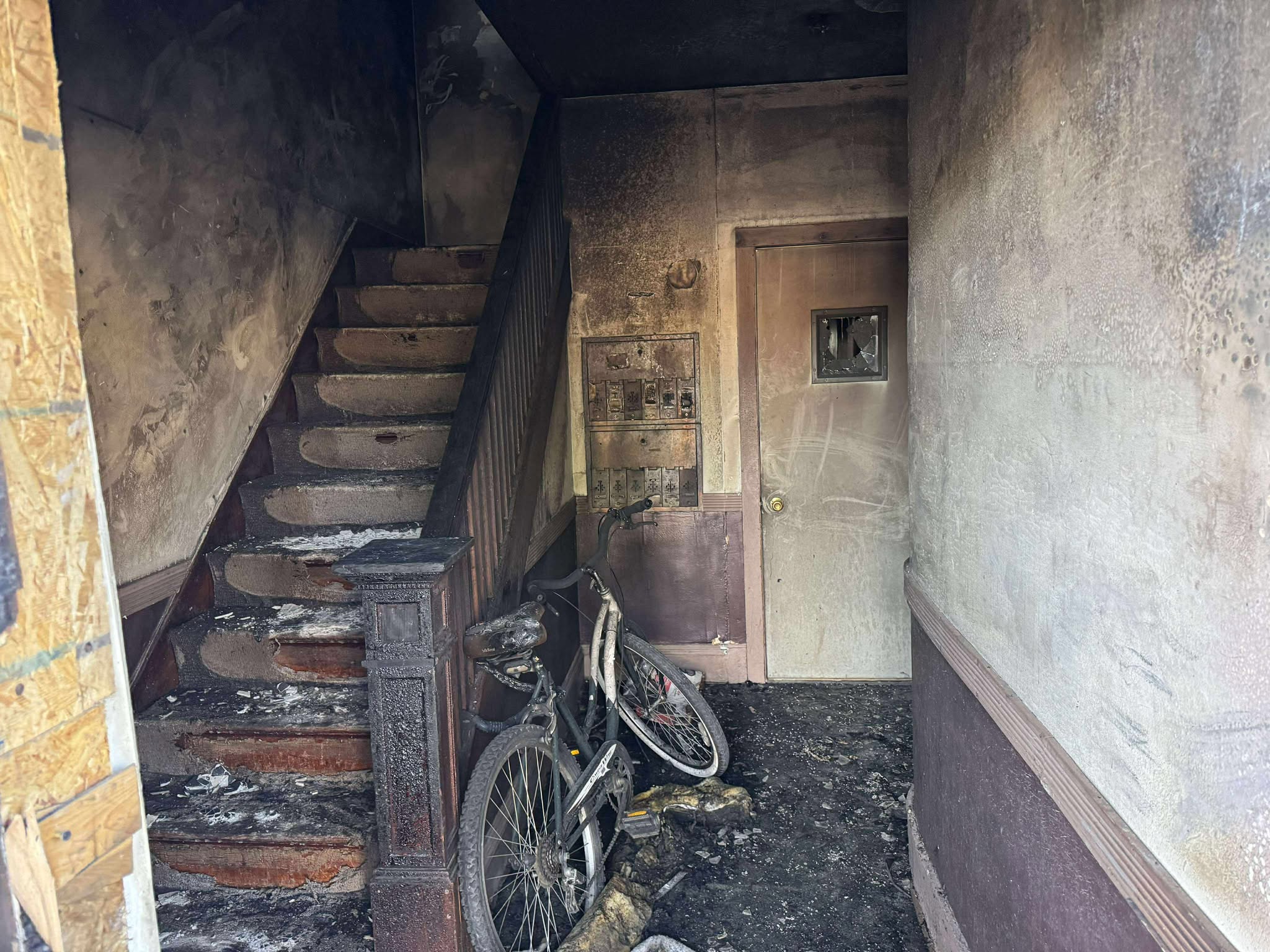
On July 9, 2025, a fire was set inside Unit B1, occupied by a Helio-placed tenant. The Syracuse Codes Department and Fire Department responded. That same week, Helio Health’s own Permanent Housing Program Director reported to building management that the B1 tenant was suspected of setting off fireworks from the window on the Fourth of July and was allowing unauthorized individuals into the building. The notification came from Helio’s own staff.
On August 25, 2025, a formal written notice was transmitted to eleven Helio Health staff members — executives, program directors, and caseworkers. It documented over $60,000 in physical damage, an occupancy collapse from 93% to 62.5%, a monthly income loss of approximately $10,740, and crime and drug conditions serious enough to require direct meetings with the Syracuse City Attorney, the Syracuse Chief of Police, and Code Enforcement. Helio’s attorney directed all further communication through counsel.
A unit-by-unit incident log submitted to Helio’s attorney on September 8, 2025 covered: a fire and repeated unauthorized occupancy in B1; a police call to B3 — a direct Helio lease — after Helio’s own caseworkers found a tenant with a firearm; broken hallway windows and stairwell sleeping in B9, a direct Helio lease; sustained trash disposal from a window in C6, a direct Helio lease. Building-wide: the SPD Warrant Squad entered multiple times to arrest individuals in Helio-leased units, biohazardous waste and hypodermic needles were hauled by dump truck, and common hallways were repeatedly soiled.
On September 24, 2025, at 5:07 a.m., a joint operation by the United States Marshals Service and local law enforcement executed a federal search warrant at 516 East Willow Street. Seven individuals were arrested. Six of those arrests occurred in Unit C2 — a unit leased directly to Helio Health, Inc. as the named tenant. The operation was captured on the building’s own security cameras.
On October 28, 2025, Helio’s attorney offered $5,000 to resolve the outstanding damage claims. On October 31 — three days later — that offer was withdrawn in writing. On that same date, a second major law enforcement operation began at 3:49 a.m. Sixteen apartments were boarded. More than ten windows were broken. Over thirty individuals were removed by the Syracuse Police Department between 3:50 a.m. and 5:00 p.m. The operation was captured on the building’s security cameras. The $5,000 offer and its withdrawal appear in the same written correspondence thread as documentation of the second raid.
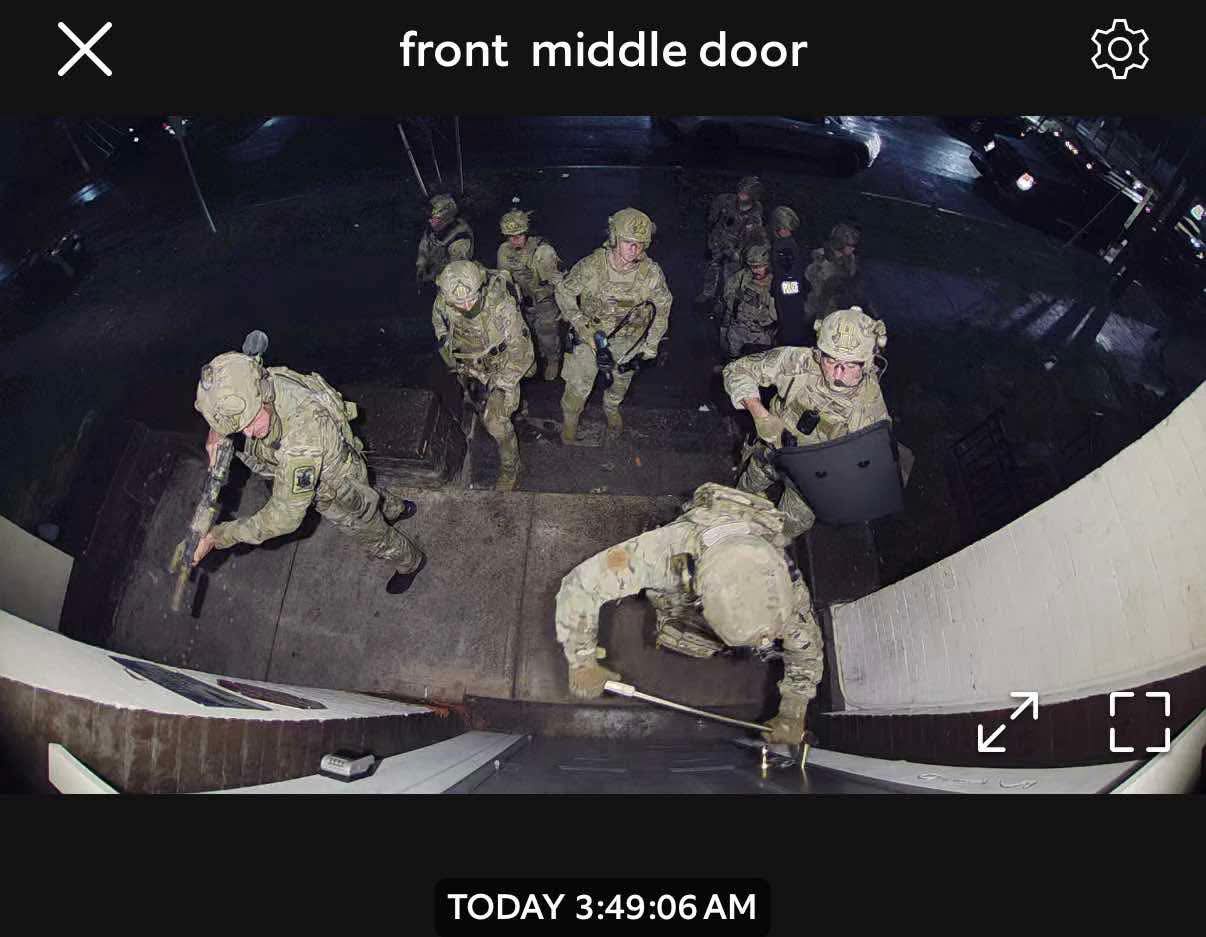
Written correspondence sent to Helio’s attorney that morning stated: “Every single unit is a HELiO tenant now, we have only 2 non-HELiO tenants in the building.” Costs were estimated to exceed $100,000. A Helio tenant or guest had separately stabbed a dog in the neck at the property — an incident that received local news coverage.
The Fire at 1269 West Genesee Street
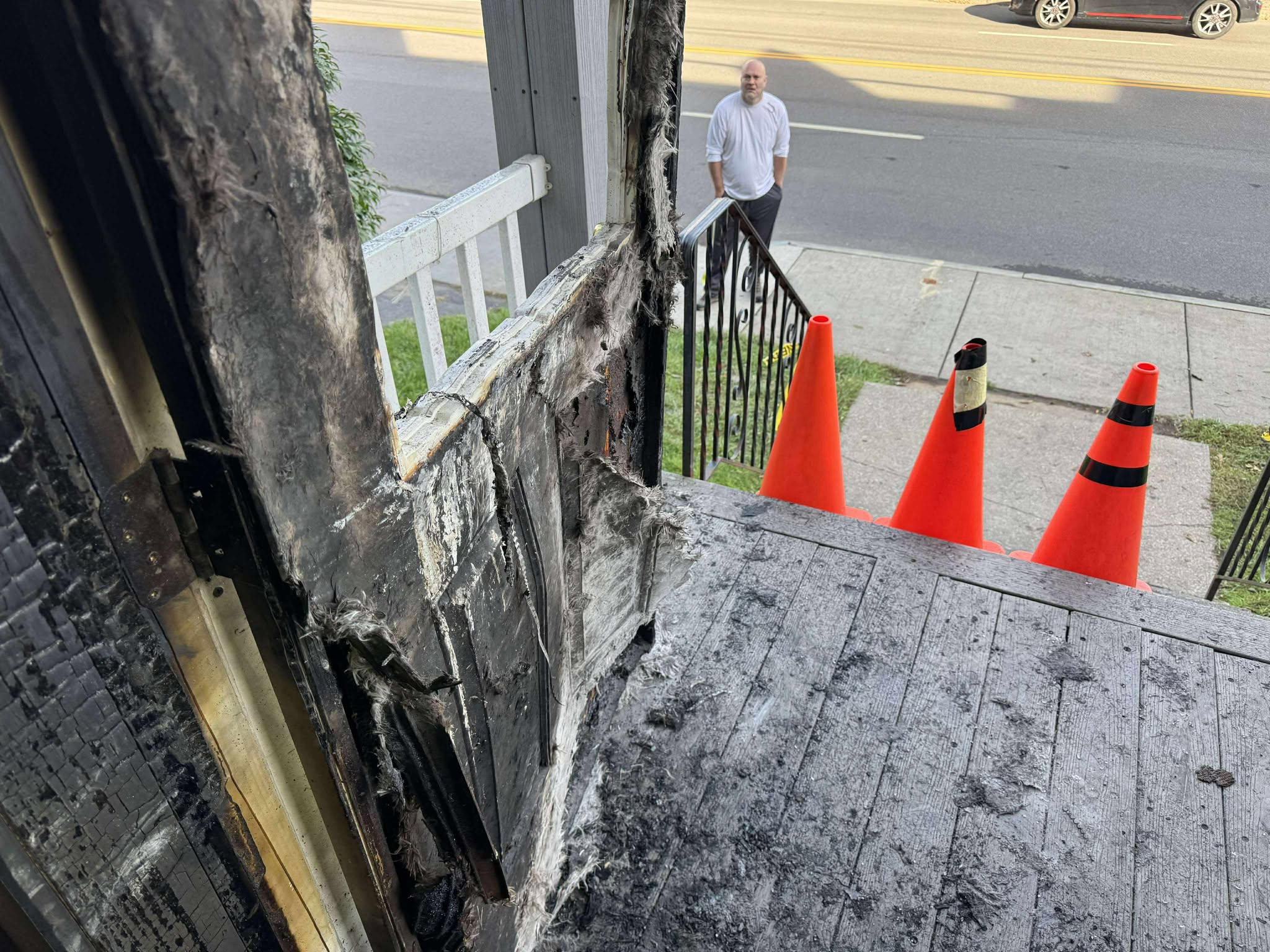
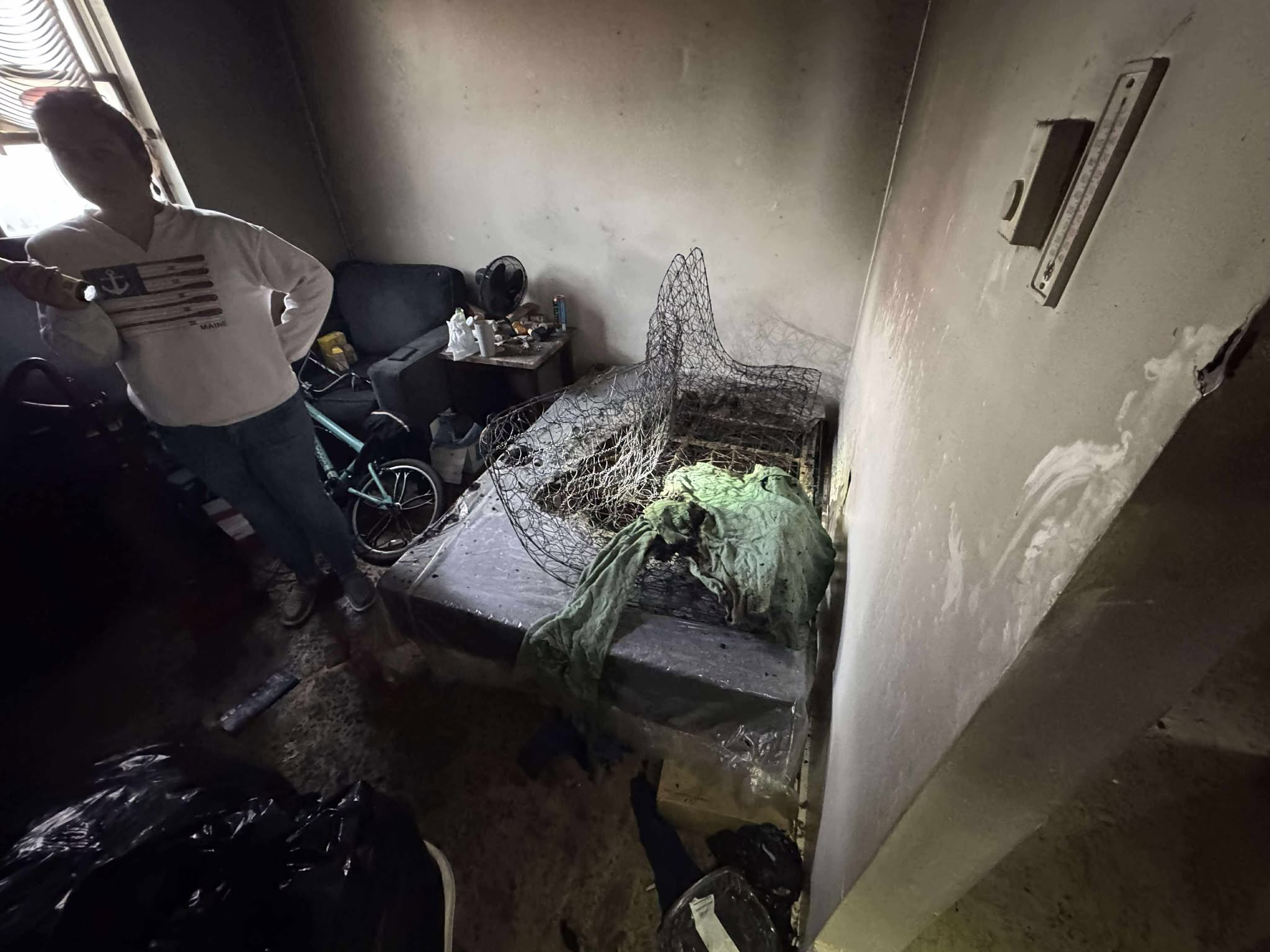
On October 2, 2025, a fire broke out at 1269 West Genesee Street, Unit 104 — another Renpro property with a Helio-placed tenant. The tenant did not carry the renters’ insurance required by the lease. On October 3, Helio Health’s own attorney, Bradley D. Morien, Esq. of Newman & Lickstein, acknowledged the fire in writing: “I understand that there was a fire at a separate Renpro unit owned and operated by Helio.” Philadelphia Insurance Companies opened Claim No. 1740144. The policy limit under Helio’s contractual liability coverage was $50,000. That maximum was paid out in full.
The Broader Pattern Across Properties
By November 2025, documented damage at 516 East Willow Street exceeded $400,000. Doors were broken off frames building-wide. Fire sprinklers had been tampered with. Security cameras had been stolen from the building. A Servpro remediation crew dispatched by Helio to begin cleanup was attacked — one worker was punched in the head by a Helio-placed tenant. The crew filed a police report and refused to return. “Cash for keys” payments were made to clear unauthorized occupants. As of early 2026, 25 units remained unrentable.
The same pattern — strangers accessing the building freely at all hours — had begun appearing at 1265 West Genesee Street, a 21-unit building with Helio placements, by November 2025. One resident there wrote to management: “People are literally walking off the road right into where I live.” At 1624 West Genesee Street, a Helio-placed tenant died; Helio did not vacate the premises. When Helio attempted to change the locks, the remaining occupants broke the door off its hinges to maintain access.
In December 2025, Helio ceased paying rent on at least 11 units across these properties, citing a letter from a third-party mortgage holder. No court order authorized that diversion. Unpaid rent through the date of the draft complaint totaled $15,067.60.
The Draft Complaint and What Happened Next
A draft civil complaint was prepared by attorney Anthony Galli of Galli Law and presented to Helio Health through their counsel. The draft asserts five causes of action: breach of contract, negligent placement, private nuisance, property waste, and breach of covenant of quiet enjoyment. Minimum stated damages total $336,667.60, covering rent arrears, eviction filing costs, direct physical damage, and lost rental income across 25 units from October 2025 through early 2026. No complaint has been filed with the court. Settlement negotiations are ongoing.
Following presentation of the draft complaint, Helio Health began removing tenants from the affected properties. More than 20 tenants have been relocated as of early 2026.
The Pattern
Set the Skyline situation and the East Willow situation side by side. In both cases, Helio Health placed a significant concentration of tenants in a privately owned building. In both cases, conditions deteriorated — police involvement, physical damage, impact on neighboring tenants. In both cases, Helio eventually removed its tenants and moved on. In both cases, the financial consequences — a $300,000 municipal penalty and $800,000 tenant settlement at Skyline; $400,000-plus in documented damage at East Willow — fell on the building’s ownership. In neither case did Helio’s revenue stream appear to be materially affected.
Helio Health’s business model does not require a placement to succeed in order to generate revenue. The organization is paid for placing people and for providing services to those people. Whether the building is damaged, whether neighboring tenants flee, whether law enforcement is called once or dozens of times — none of that affects Helio’s Medicaid billing or its federal grant eligibility. The downside risk in these arrangements is not symmetrical. The landlord owns it. Helio does not.
Whether this represents a systemic problem with the Housing First model as federal policy, a gap in New York State’s oversight of supportive housing placement organizations, or something more specific to Helio Health’s program operations is a legitimate question. What is documented — in police records, insurance filings, city enforcement actions, and Helio’s own legal counsel’s written correspondence — is that it has happened before, and it has happened again.
Financial data sourced from Helio Health Inc.’s publicly filed Form 990, available via ProPublica Nonprofit Explorer. Skyline Apartments reporting cited from CNY Central. Property incidents sourced from written correspondence, building security camera records, insurance claim documentation, and a draft civil complaint prepared by Galli Law. No complaint has been filed with the court. Allegations in the draft complaint are the plaintiff’s claims and have not been adjudicated. Nothing in this article constitutes legal advice.
Looking for Property Management in Central New York?
RenPro manages residential properties across the Syracuse metro area and beyond.