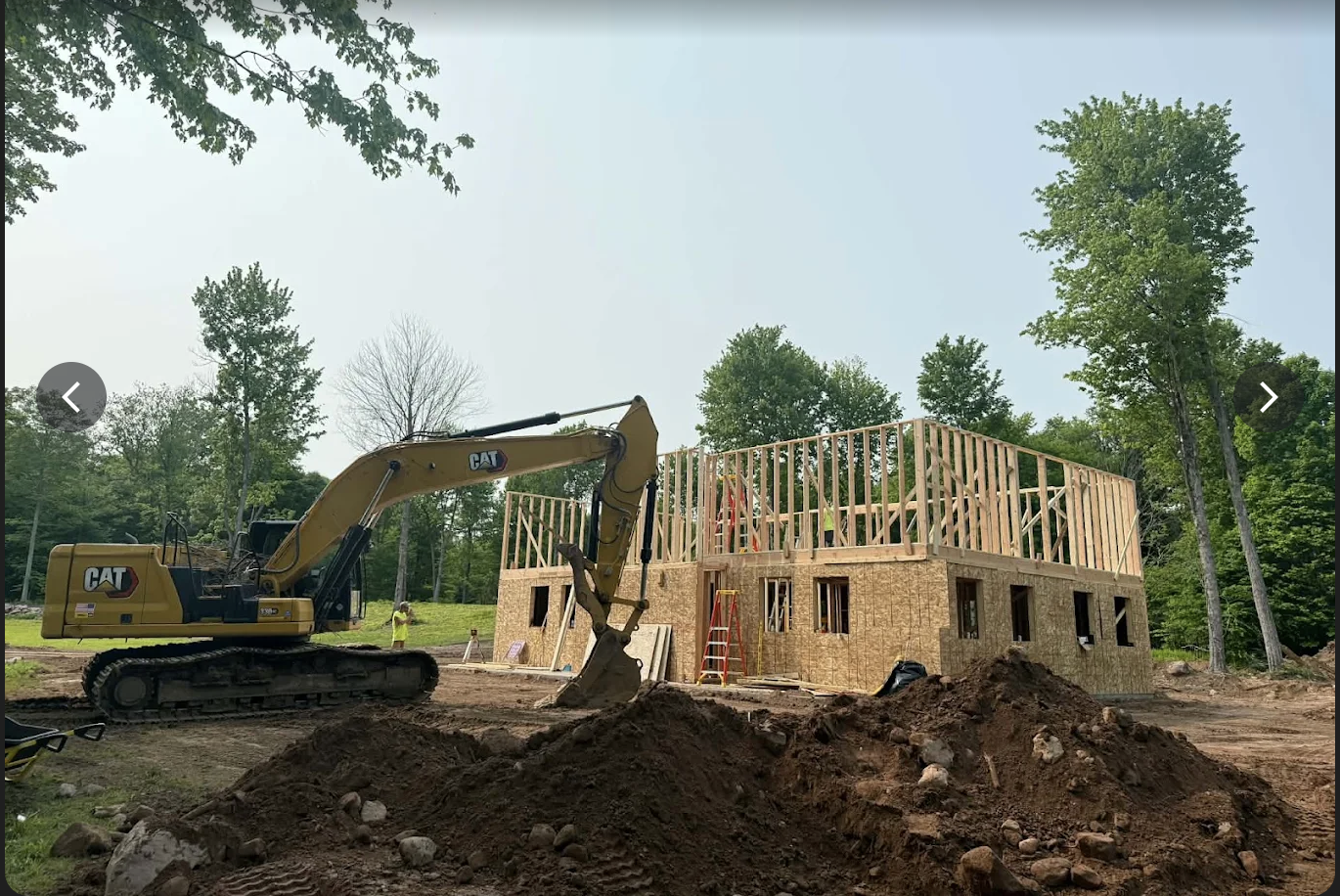
A 14-unit apartment building on Midler Avenue in Syracuse sat vacant for three years. The developer who bought it in 2021 had permits, financing, and a general contractor lined up within six months. Construction started in early 2022. By that fall, the foundation walls on the east side had cracked. Water was pooling under the slab. The footers on the south corner had dropped nearly two inches.
The excavation contractor had graded the lot toward the building instead of away from it. The compaction testing on the backfill was never done. Seventeen months and roughly $340,000 in remediation costs later, the project finally broke even on framing.
That story is not unusual in Central New York.
What Sits Beneath the Slab
Onondaga County sits on some of the most variable soil conditions in the Northeast. Glacial till, lacustrine clay, pockets of organic silt, limestone shelves that drop off without warning. Drive ten minutes in any direction from downtown Syracuse and the subsurface geology changes completely. The south side near Onondaga Creek has deep alluvial deposits that shift under load. The north side toward Liverpool sits on dense glacial hardpan that can shatter excavator teeth.
None of that matters if the person operating the machine understands it. All of it matters if they do not.
A licensed excavation contractor who has worked CNY soil for 15 or 20 years will tell you what is coming before the geotechnical report does. They have cut into Tully clay at 4 feet on one lot and hit solid rock at 18 inches on the next one over. They know which neighborhoods flood, which parcels have buried debris from old demolitions, and where the water table sits in April versus August.
A general contractor from out of the area, or a budget excavator bidding $8,000 under everyone else, does not know any of that.
Grading Failures and Where They Lead
Grading is the single most consequential earthwork decision on a residential or small commercial project. Get it wrong by two percent of slope and water runs toward the foundation instead of away. In CNY, where annual rainfall averages 38 inches and snowmelt dumps another 10 to 15 inches of water equivalent every spring, that two percent is the difference between a dry basement and a structural failure.
The symptoms do not show up during construction. They show up 14 months later when the basement walls start bowing. Or when the garage slab heaves because frost got under it through saturated fill. Or when the retaining wall the landscaper built starts leaning because nobody compacted the base in lifts.
By that point, the excavation contractor has been paid, the GC has moved on, and the owner is staring at a six-figure fix on a project that was supposed to be turning revenue.
Footers, Compaction, and the Corners People Cut
Footer depth in Onondaga County is 48 inches minimum to get below the frost line. That is code. What is not in the code is what happens when the excavator digs to 48 inches, hits soft clay, and the contractor decides to pour anyway instead of over-excavating and replacing with structural fill.
Differential settlement. One corner of the building drops a quarter inch per year. Cracks propagate through the block. Doors stop closing. The framing shifts. Five years in, you are looking at underpinning costs that exceed the original foundation budget by a factor of three.
Compaction is the other corner that gets cut. Backfill around a foundation needs to go in at 6-to-8-inch lifts, each one compacted to 95 percent modified Proctor density. That takes time. Time is money on a job site. So the fill goes in as one big push, the dozer runs over it twice, and the landscaper caps it with topsoil. It looks fine for about a year.
Then the settlement starts. The sidewalks crack. The utility trenches sink. The stormwater drainage reverses pitch. Fixing settled backfill around an occupied building with utilities, landscaping, and a parking lot on top of it is one of the most expensive change orders in construction.
Land Clearing on Infill Lots
Syracuse has hundreds of infill lots from demolitions done over the past two decades. The Syracuse Land Bank alone has transferred over 800 properties since 2014. Many of those lots still have buried foundation walls, old cisterns, fuel oil tanks, and debris fields under 12 inches of topsoil.
A good land clearing crew knows to probe before they strip. They run a trackhoe across the lot methodically, not just where the building footprint will sit. They find the old basement. They find the tank. They find the 6-inch clay sewer lateral that the city has no record of but that connects to the main 40 feet into the street.
A crew that skips that step buries the problem under new construction. And it surfaces later, always at the worst possible time.
Drainage, Stormwater, and Municipal Compliance
Onondaga County has some of the strictest stormwater regulations in New York State, a direct result of the Onondaga Lake cleanup consent decree that has been in effect since 1998. Any land disturbance over one acre triggers a full SWPPP (Stormwater Pollution Prevention Plan). Even smaller projects within the Onondaga County Sanitary District require erosion and sediment control plans.
The excavation contractor is the one who builds the silt fences, installs the check dams, grades the swales, and constructs the detention areas. If those controls fail during construction, the fines hit the property owner. Not the contractor. The owner.
DEC violations for sediment discharge into protected waterways start at $37,500 per day in New York. Onondaga Creek, Ley Creek, Harbor Brook, and Ninemile Creek all run through active development corridors in the Syracuse metro. The margin for error is exactly zero.
Choosing the Excavation Contractor
On a typical residential development or rehab project, the excavation contract represents 8 to 15 percent of total project cost. The temptation is to treat it as commodity work and take the low bid. That math does not hold when one grading mistake can trigger a remediation bill that exceeds the entire excavation contract by five times.
The excavation contractor sets the elevation, the drainage pattern, the compaction density, and the bearing capacity of everything the rest of the project sits on. The framer relies on the foundation being level. The plumber relies on the sewer pitch. The roofer relies on the grade directing water away from the building. Every trade that follows is building on the excavator’s work.
If that work is wrong, nothing above it can compensate.
For projects in the Syracuse and Central New York area, Backwell handles excavation, land clearing, grading, and site preparation. They have worked Onondaga County soil for years and understand what sits beneath it.
Looking for Property Management in Central New York?
RenPro manages residential properties across the Syracuse metro area and beyond.